THE SS DIRLEWANGER BRIGADE
Street fighting in Warsaw during the 1944 uprising, Wola district, August 1944.
Bundesarchiv (Bild 183-R97906; photograph by Schremmer). The unit depicted cannot be conclusively identified. The Bundesarchiv catalogue associates the image with Waffen-SS troops and retains an earlier attribution note indicating “Dirlewanger?” as a possible identification.
A CHRONICLE OF UNRESTRAINED VIOLENCE
Text by Max
The unit commonly referred to as the Dirlewanger Brigade changed its official designation several times during the war, ranging from a small special detachment to a regiment and, later, a nominal brigade. For clarity, it is referred to here as the Dirlewanger unit or formation, except where a specific historical designation is relevant.
WARSAW, AUGUST 1944
The smoke hung low over the Wola district, and the smell of dust, cordite and blood filled the air. German units were moving methodically from street to street, clearing houses with explosives and automatic fire. Civilians were driven from cellars and courtyards, often executed where they stood. Amid the chaos, even seasoned frontline soldiers paused when a particular SS formation arrived.
Its men did not advance like an army. They laughed, drank and looted as they moved through the ruins. Some dragged civilians into the open. Others fired into basements at random. Later, witnesses struggled to describe what they had seen. They spoke not of soldiers but of criminals wearing uniforms.
This was the Dirlewanger Brigade. Under the command of Oskar Dirlewanger, a convicted child abuser and violent alcoholic, it became one of the most destructive instruments of the Nazi regime. To understand how such a unit could exist, it is necessary to look at two intertwined stories: the violent trajectory of its commander and the system that not only tolerated him but repeatedly rewarded him.
A LIFE SHAPED BY VIOLENCE
Oskar Paul Dirlewanger was born in Würzburg in 1895, the son of an attorney in a respectable middle-class household. His early life gave no clear indication of the path he would follow. Like many men of his generation, he was profoundly shaped by the First World War. He served with distinction, earning the Iron Cross, and returned deeply marked by prolonged exposure to violence.
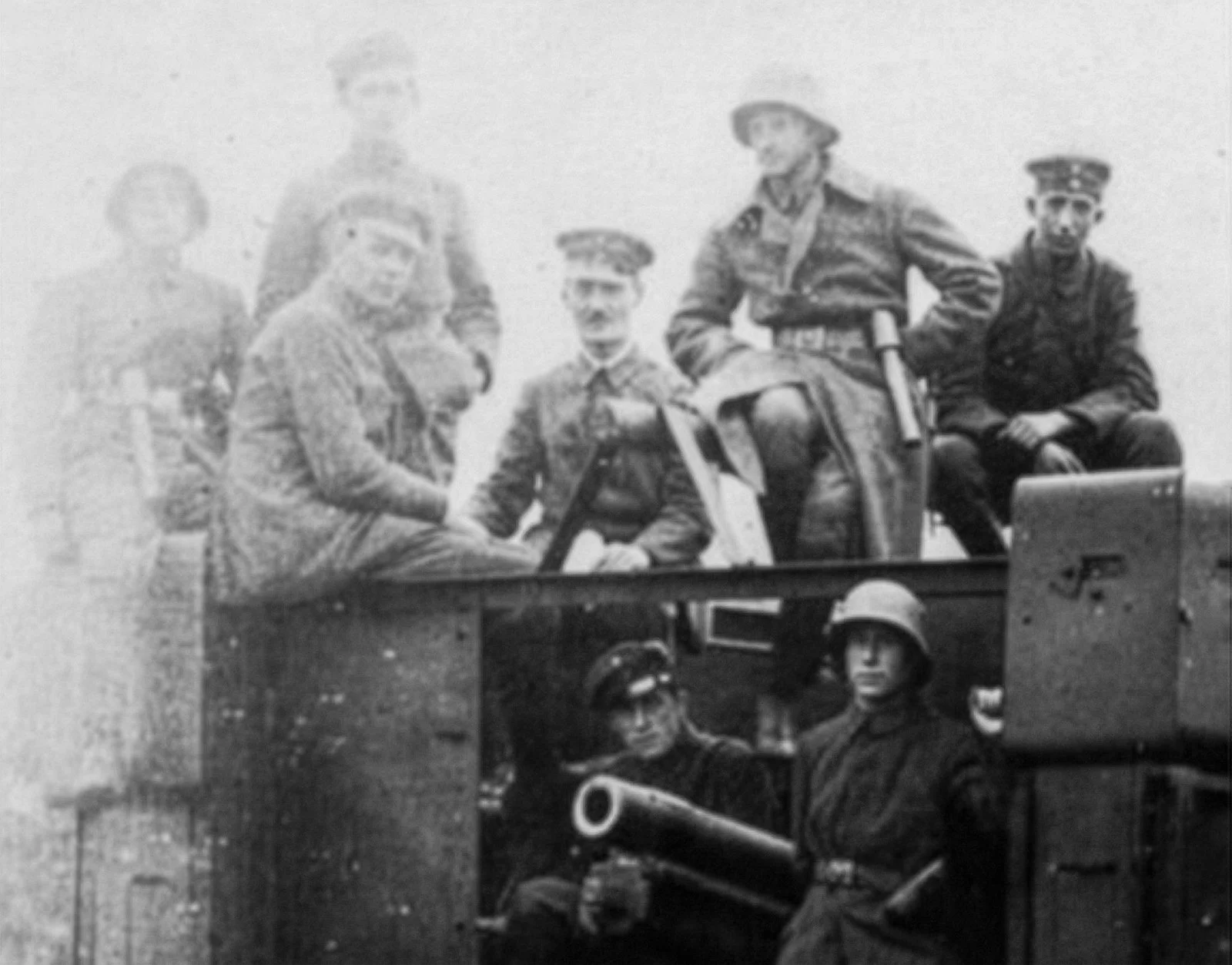
Oskar Dirlewanger as a Freikorps leader aboard an armoured train during the post war unrest in Germany, c. 1920.
Stadtarchiv Heilbronn, D027-3.
After the war, Dirlewanger drifted into the Freikorps, the paramilitary formations that crushed uprisings and political opponents across Germany. These groups normalised brutality as a political tool. Violence became not a last resort, but a method. Although Dirlewanger earned a doctorate in political science in 1922, his civilian life was increasingly dominated by alcoholism, aggression and predatory behaviour.
In 1934, he was arrested and convicted for the repeated sexual abuse of a girl under the age of fourteen. The conviction cost him his doctorate, his SS membership and his social standing. Under normal circumstances, it should have ended his public career.
Instead, it did not.
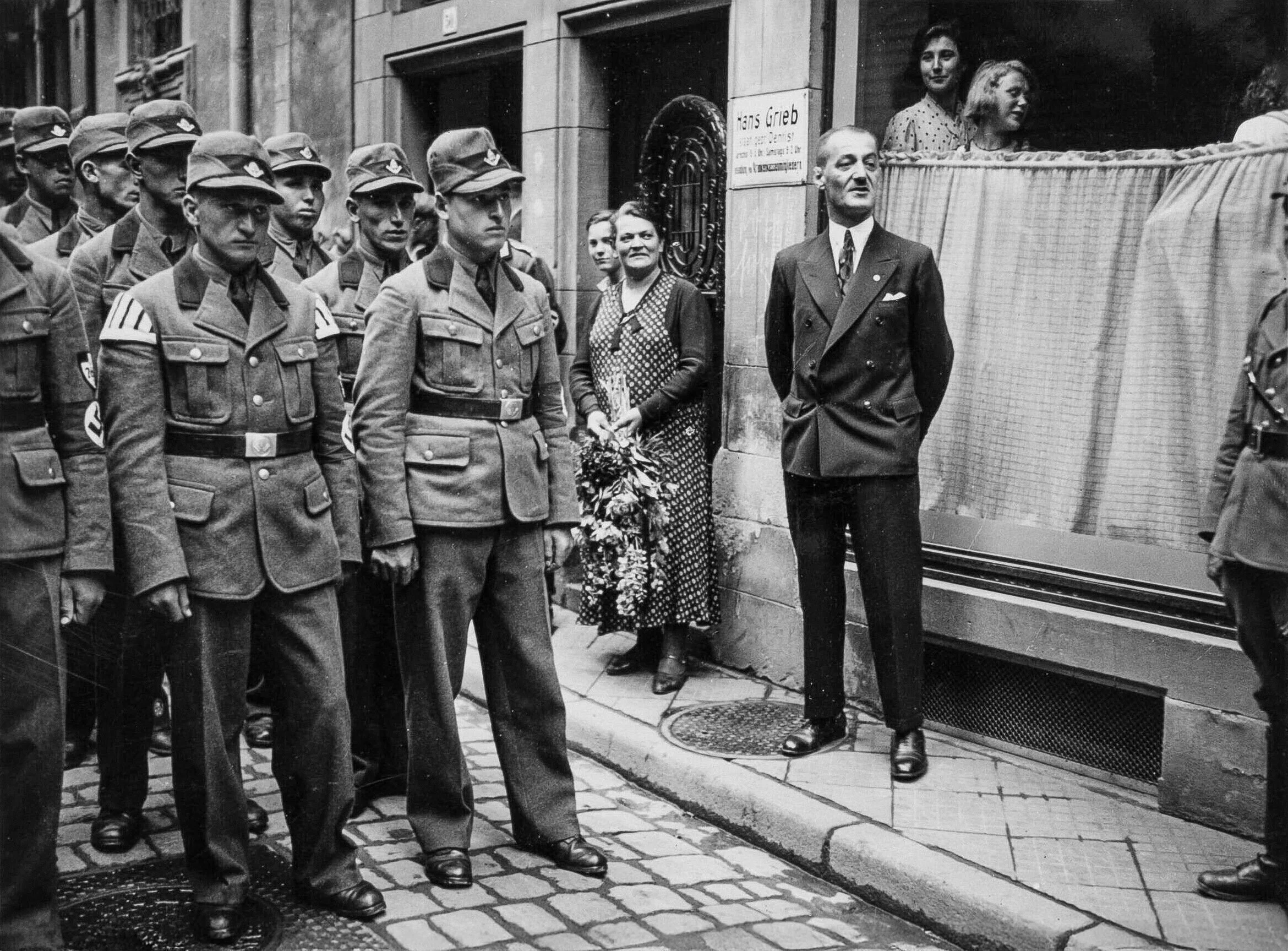
Oskar Dirlewanger in Heilbronn, 1937, shortly after his release from Welzheim Prison.
Stadtarchiv Heilbronn, D079-37.
Through the intervention of Gottlob Berger, an old comrade who had risen within the SS leadership, Dirlewanger was sent to fight with the Condor Legion during the Spanish Civil War. The assignment served as political rehabilitation through violence. He returned wounded, decorated and restored to favour. By the outbreak of the Second World War, he had regained his SS status.
What disqualified him morally made him useful politically. The Nazi system increasingly relied on men willing to carry out extreme policies without hesitation or restraint. Dirlewanger was precisely such a man.
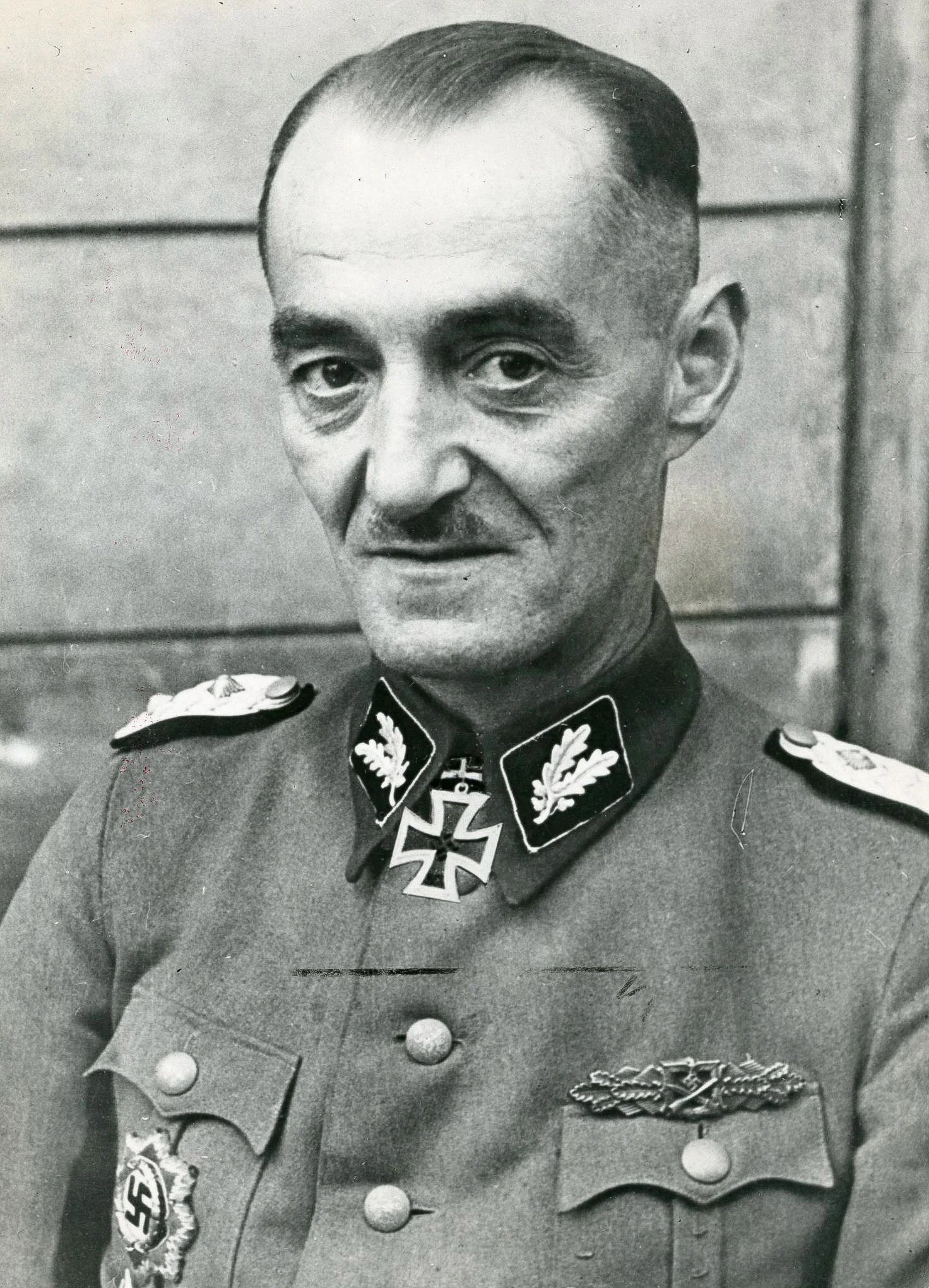
Oskar Dirlewanger.
Portrait photograph of the SS officer who later commanded the penal formation commonly known as the Dirlewanger Brigade. Bundesarchiv.
FROM PENAL UNIT TO INSTRUMENT OF TERROR
In 1940, Heinrich Himmler approved the creation of a small SS formation composed initially of convicted poachers. Himmler believed that men accustomed to hunting and violating civilian law could be repurposed for anti-partisan warfare. Dirlewanger was placed in command, not despite his past, but because of it.
The unit expanded rapidly. It absorbed violent criminals released from prisons and concentration camps, including murderers and sexual offenders. Later, foreign detainees and Soviet prisoners of war were coerced into service. Discipline was weak, oversight minimal and punishment rare. Contemporary observers within the SS and police apparatus noted a formation that appeared to operate with an unusual degree of impunity.
Initially deployed in occupied Poland, the unit guarded labour camps and participated in anti-Jewish actions. Testimonies describe extortion, beatings and sexual violence. Even within the SS, concerns were raised about corruption and uncontrolled brutality. The response was not dissolution, but redeployment.
The unit was transferred east, into the forests and villages of Belarus.
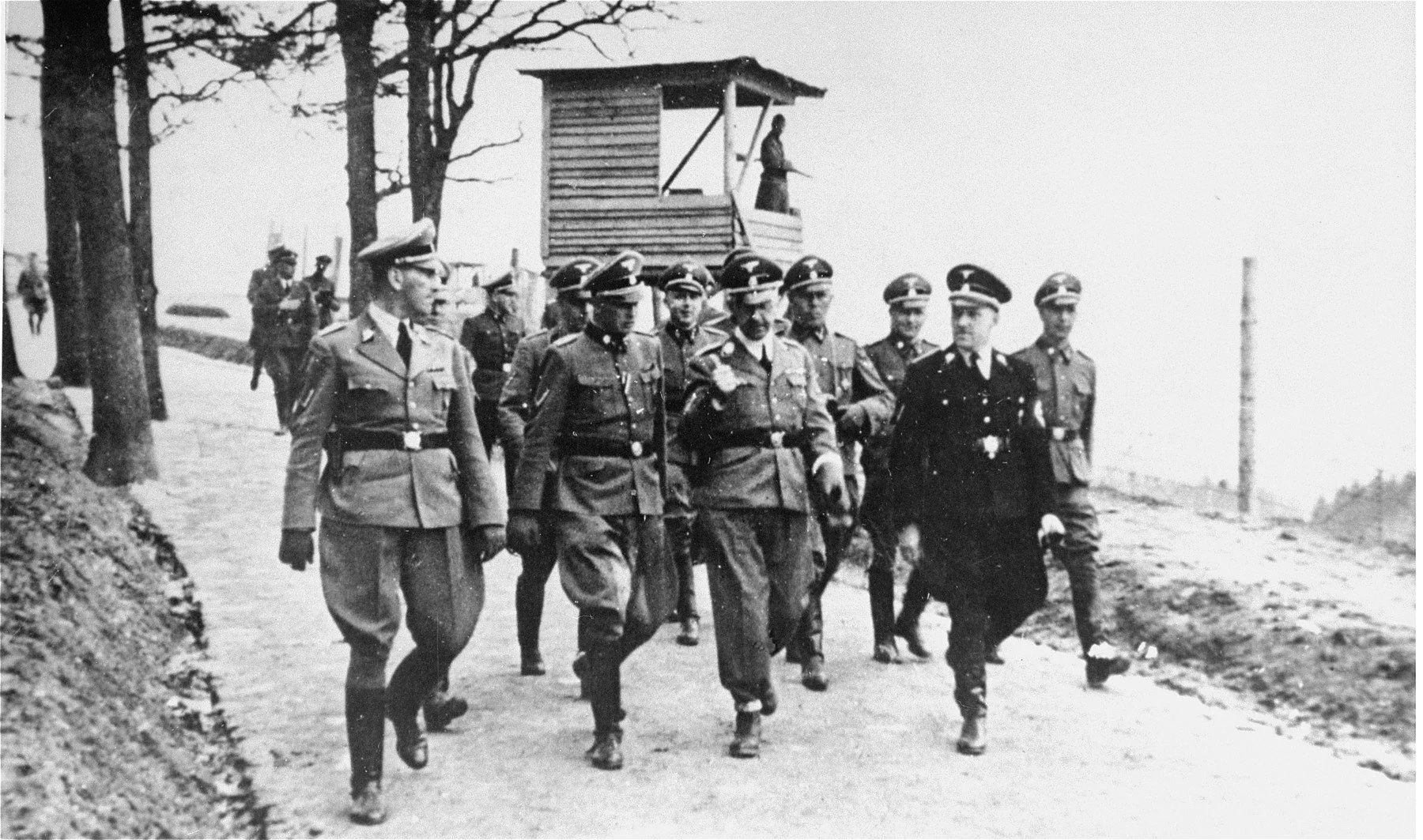
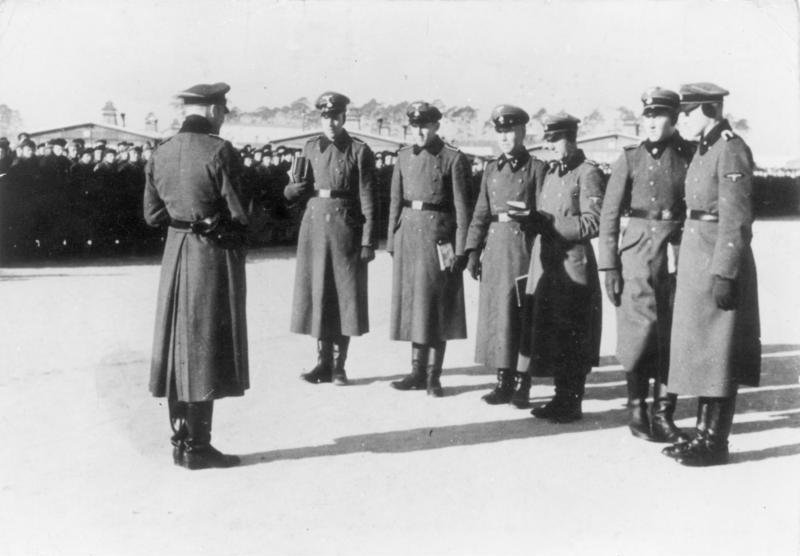
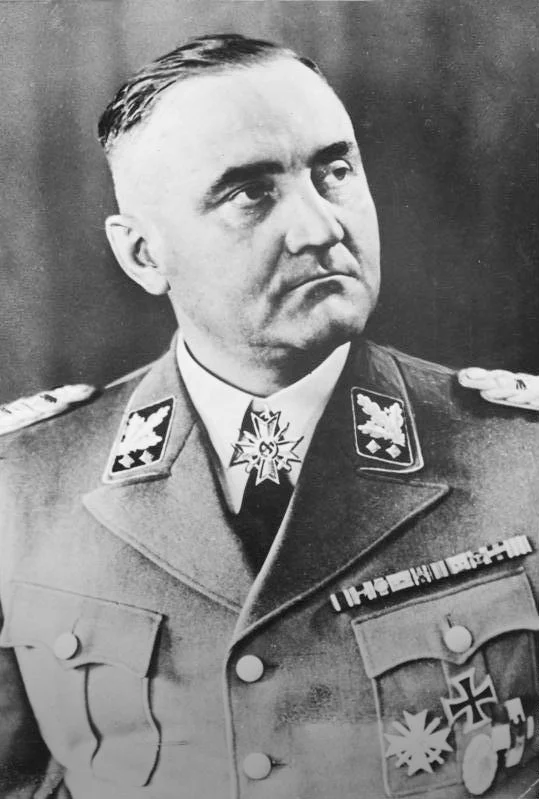
These images illustrate the institutional and personal framework from which the Dirlewanger formation emerged. Heinrich Himmler, shown during an inspection visit to the Mauthausen concentration camp, represents the SS leadership that authorised and protected extreme violence. The photograph from Sachsenhausen depicts SS officers during a roll call at the camp where the Dirlewanger unit was initially assembled and administered in 1940, reflecting the concentration camp system that normalised coercion, brutality and impunity. The portrait of Gottlob Berger highlights the role of personal patronage within the SS hierarchy: Berger’s protection was decisive in Dirlewanger’s rehabilitation and continued advancement despite his criminal record. Together, the images situate the Dirlewanger formation not as an aberration, but as a product of an SS system that rewarded loyalty and violence over legality and restraint.
BELARUS AND THE LOGIC OF DESTRUCTION
In occupied Belarus, German anti-partisan warfare reached its most radical form. Officially described as Bandenbekämpfung, these operations were presented as military campaigns. In practice, they targeted civilian populations suspected of supporting resistance.
Dirlewanger’s unit became a central participant in these operations, particularly during the large-scale sweep known as Operation Cottbus in 1943. German reports recorded thousands of enemy dead. Later archival research demonstrated that the overwhelming majority of victims were unarmed villagers.
Villages were encircled and emptied. Civilians were driven into barns, yards or churches. Buildings were burned. Those attempting to flee were shot. Survivors described armed men moving deliberately through smoke-filled streets, carrying torches and automatic weapons. Some testimonies refer to the use of dogs to flush people from hiding places, though the documentation for such details varies across sources.
By the time the unit left Belarus, its character had fundamentally changed. Violence was no longer a means to an end. It had become the purpose itself. The war crime was not an excess. It was the mission.
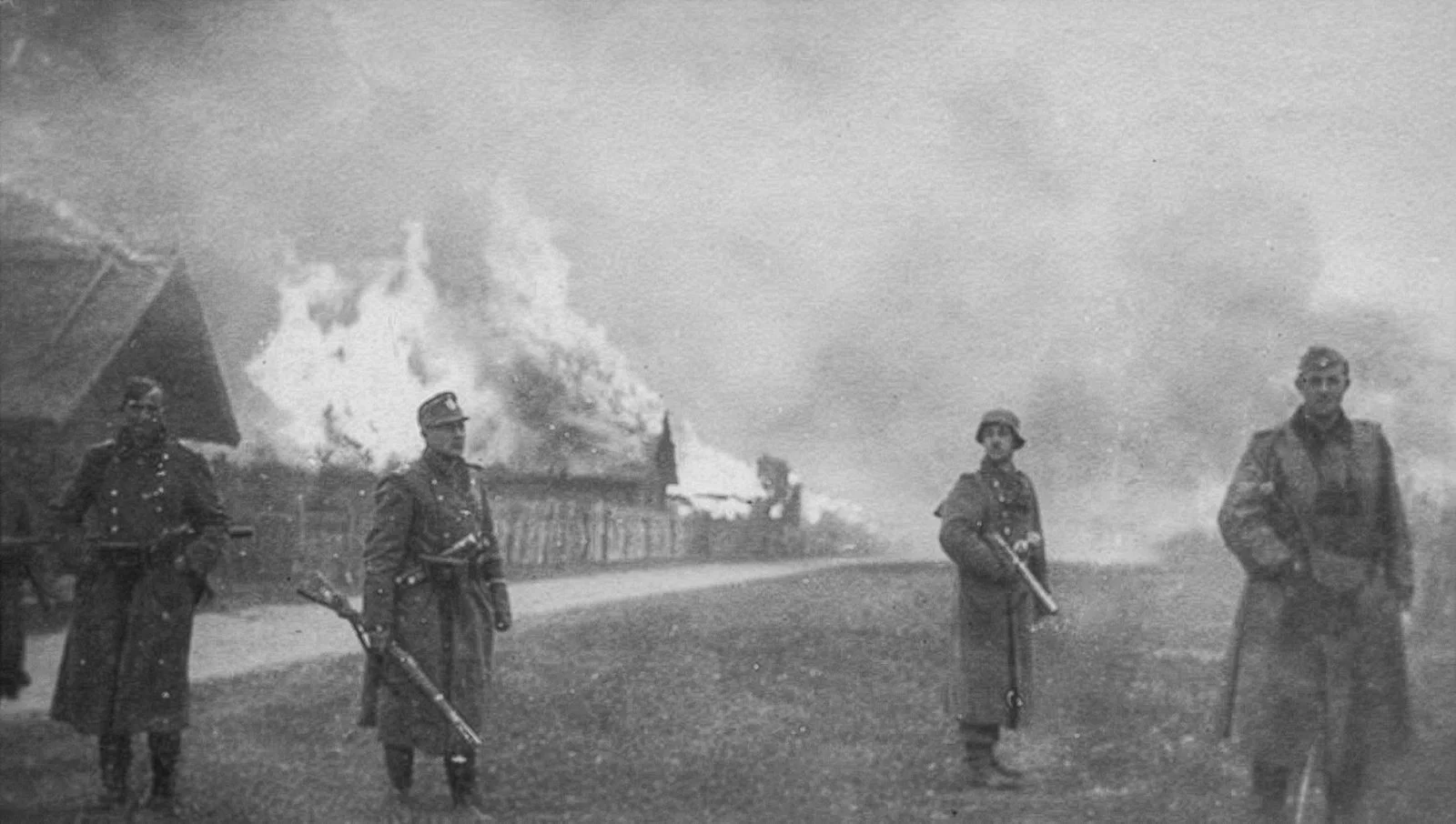
German Ordnungspolizei during a punitive operation in occupied Belarus, Mogilev region, October 1943. Although the men shown do not belong to the Dirlewanger unit, the scene illustrates the broader logic of Bandenbekämpfung, the system of anti-partisan warfare in which the SS-Sonderregiment Dirlewanger became a central actor.
WARSAW: THE APEX OF CRUELTY
In August 1944, the Polish Home Army launched an uprising in Warsaw. The German response was not aimed at restoring control, but at destroying the city as a warning. Dirlewanger’s brigade was deployed to the Wola district, one of the most densely populated parts of the capital.
What followed was a massacre. Over several days, civilians were systematically killed. Hospitals were overrun and patients executed. Entire families were shot in courtyards or burned inside their homes. Sexual violence was widespread. Children were murdered alongside adults.
Survivors recalled soldiers laughing, drinking, and firing into basements and cellars without provocation. In one documented account from Wola, a woman was shot while attempting to shield her infant; the child was killed immediately afterwards. For many witnesses, the most disturbing aspect was not only the violence itself, but its deliberate, almost routine character.
Other German units, themselves hardened by years of occupation warfare, later testified to the extreme nature of what they observed. Erich von dem Bach-Zelewski, the SS commander responsible for crushing the uprising, complained that Dirlewanger’s men undermined discipline. His objections were ignored.
The violence was not a breakdown of policy, but its execution. Berlin wanted the city broken. Himmler praised the results, and Dirlewanger received further decorations. By the end of the fighting, only a fraction of the brigade’s original strength remained. It was quickly replenished with new convicts and redeployed, later participating in the suppression of the Slovak National Uprising.
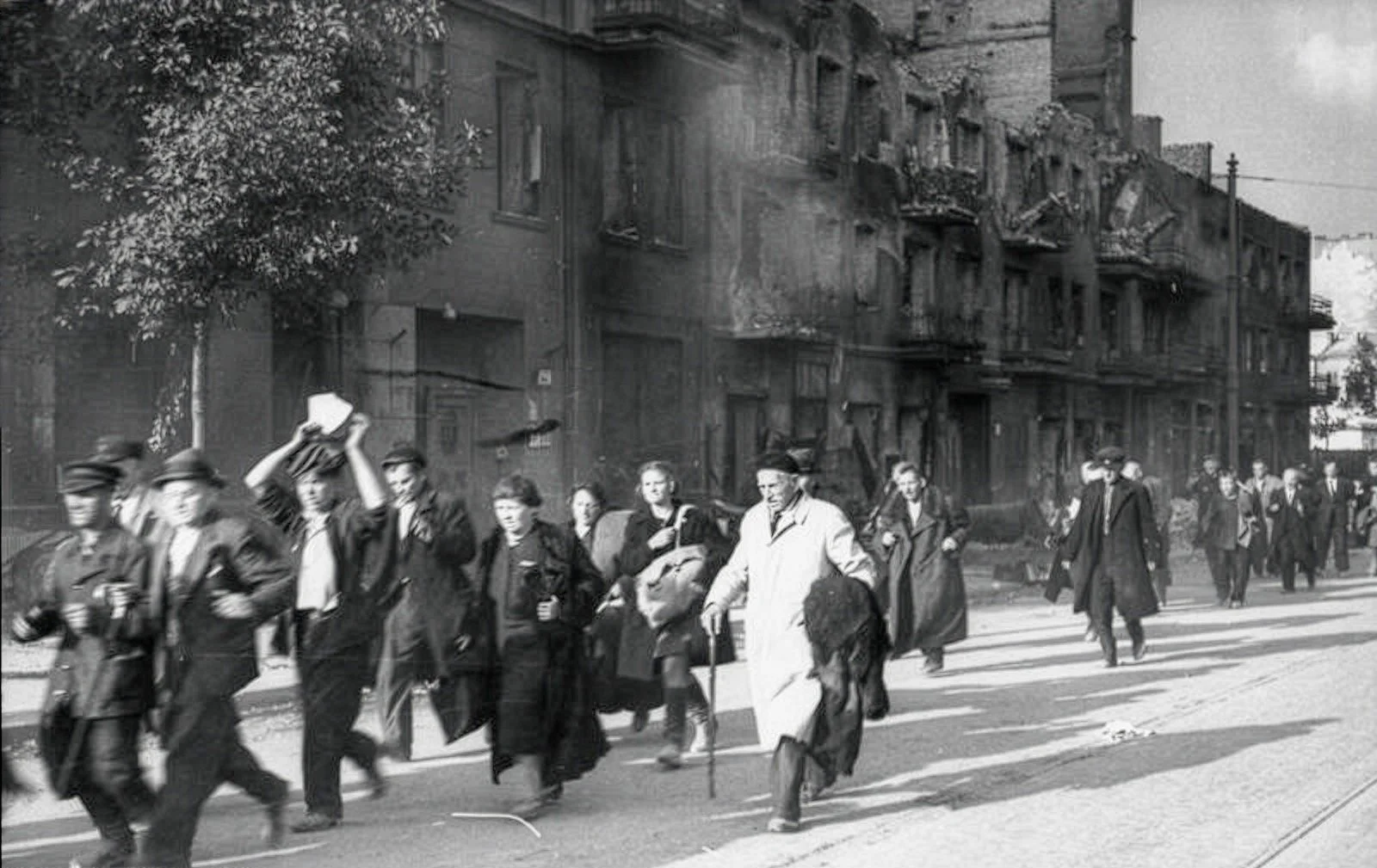
Civilians fleeing through the streets of Warsaw during the German suppression of the uprising, August 1944. The destruction of residential buildings and the mass flight of non-combatants reflect the logic of annihilation that defined the campaign in districts such as Wola, where Dirlewanger’s unit played a central role. Bundesarchiv (Bild 101I-685-0412-15), photograph taken August 1944.
DEATH AND AFTERMATH
In early 1945, Dirlewanger was wounded and removed from active command. As the Third Reich collapsed, he attempted to disappear into southern Germany. French forces captured him in June.
While in custody, he was recognised by former prisoners. Shortly afterwards, he was beaten to death in a temporary detention facility. His official death certificate cited natural causes, a formulation that postwar investigations and testimonies have consistently contradicted.
The fate of his men was uneven. Some were prosecuted. Many vanished. The full scale of the unit’s crimes will never be known. Documentation was destroyed, witnesses killed or displaced. Historians estimate that tens of thousands of civilians died as a result of the brigade’s operations across Poland, Belarus, Slovakia and Warsaw.
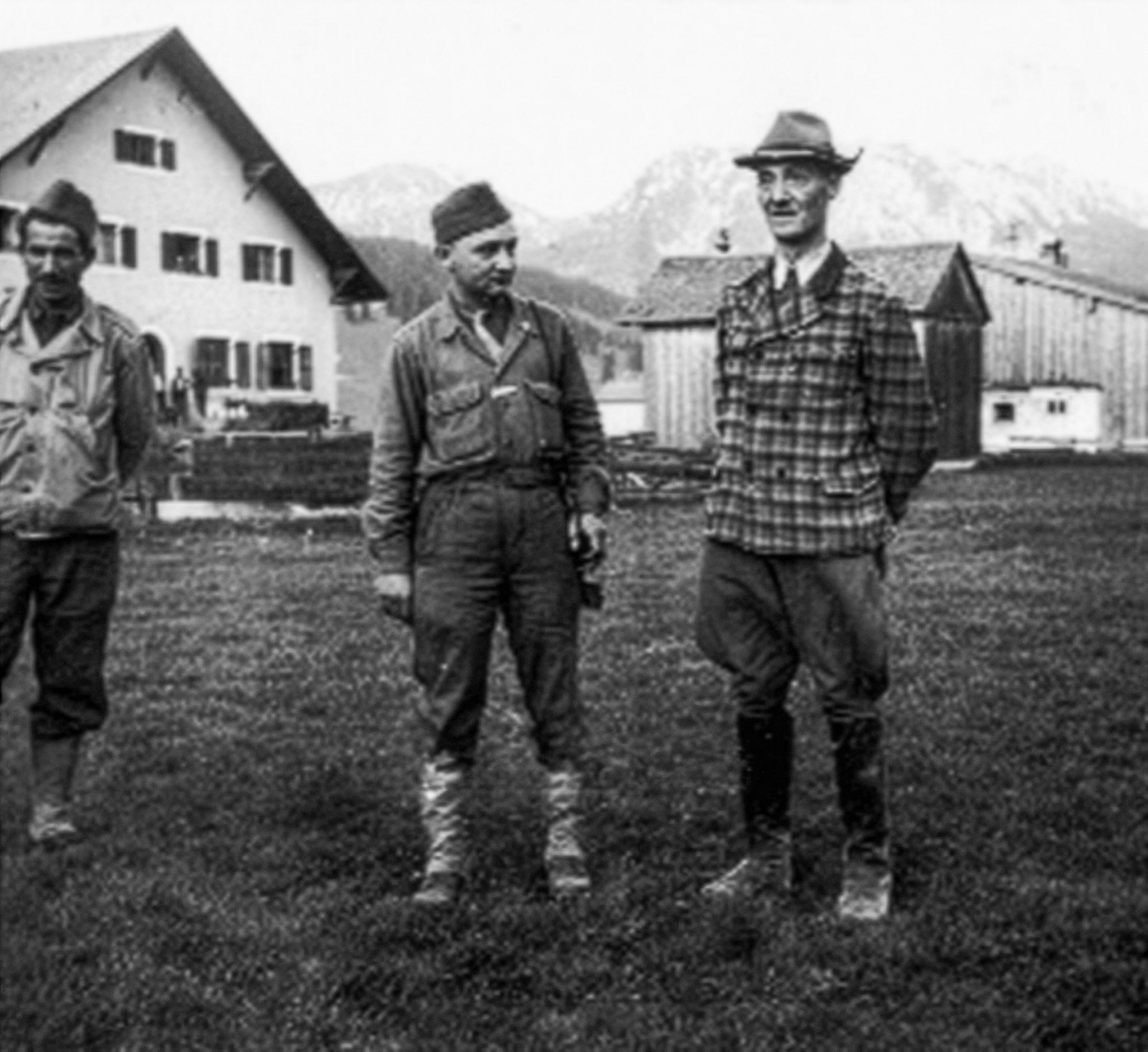
Oskar Dirlewanger in Austria, May 1945, shortly after his arrest by French forces.
The final known photograph of Dirlewanger before his death in custody. Photograph by Serge Bouchet de Fareins.
UNDERSTANDING THE DIRLEWANGER PHENOMENON
The Dirlewanger Brigade was not an aberration. It was an extreme expression of tendencies already present within the SS system. Anti-partisan doctrine encouraged collective punishment. Racial ideology stripped civilian populations of protection. Success was measured in destruction.
Christian Ingrao has shown how the SS attracted men who believed violence could reshape society. French MacLean’s archival research demonstrates how Dirlewanger’s unit became a space where state power and criminality merged. Timothy Snyder’s work on the region known as the Bloodlands places these events within a wider landscape of mass death created by competing totalitarian regimes.
Dirlewanger was not simply a sadist who slipped through the cracks. He was the product of a system that rewarded brutality, dismissed restraint and treated entire populations as expendable.
To study the Dirlewanger Brigade is therefore not only to confront a particularly disturbing chapter of the Second World War. It is to understand how quickly institutions can collapse into organised criminality when ideology and policy remove moral boundaries.
Dirlewanger was not unique. That is the most unsettling lesson of all.
SELECTED REFERENCES
Christian Ingrao, Believe and Destroy: Intellectuals in the SS War Machine. Polity Press, 2013.
French L. MacLean, The Cruel Hunters: SS-Sonderkommando Dirlewanger’s War in the East. Schiffer Military History, 1998.
Timothy Snyder, Bloodlands: Europe Between Hitler and Stalin. The Bodley Head, 2010.
Richard Rhodes, Masters of Death: The SS-Einsatzgruppen and the Invention of the Holocaust. Vintage Books, 2002.
United States Holocaust Memorial Museum (ushmm.org).
Yad Vashem (yadvashem.org).
German and Polish postwar investigations into Operation Cottbus and the Wola Massacre.
SS judicial records and postwar testimonies, including material relating to the investigations conducted by Georg Konrad Morgen.
APPENDIX: ORGANISATIONAL DESIGNATIONS OF THE DIRLEWANGER UNIT (SIMPLIFIED OVERVIEW)
The formation commonly referred to as the Dirlewanger Brigade underwent several changes in name, size and formal status during the war. The designations below reflect the unit’s official titles at different stages, while recognising that its actual strength and internal organisation often lagged behind these labels.
1940
Sonderkommando Dirlewanger
A small special detachment, roughly company-sized, initially composed primarily of convicted poachers.
1941–1942
SS-Sonderbataillon Dirlewanger
Expanded to battalion strength and increasingly employed in so-called anti-partisan operations in occupied Poland and the eastern territories.
1943
SS-Sonderregiment Dirlewanger
Formally designated a regiment, comprising several battalions, though marked by chronic indiscipline and fluctuating manpower.
1944 (Warsaw Uprising)
Often referred to as SS-Sturmbrigade Dirlewanger
The designation “brigade” was used in contemporary documents and later accounts, particularly during the suppression of the Warsaw Uprising. In practice, the formation remained organisationally unstable and generally below the strength of a standard brigade.
1945 (formal designation)
36th Waffen-Grenadier Division of the SS
This title represented a largely nominal expansion. The unit never functioned as a fully operational division in the conventional military sense and was composed of depleted, ad hoc elements amid the final collapse of the German war effort.