CHANEL 2.55 VS CLASSIC FLAP
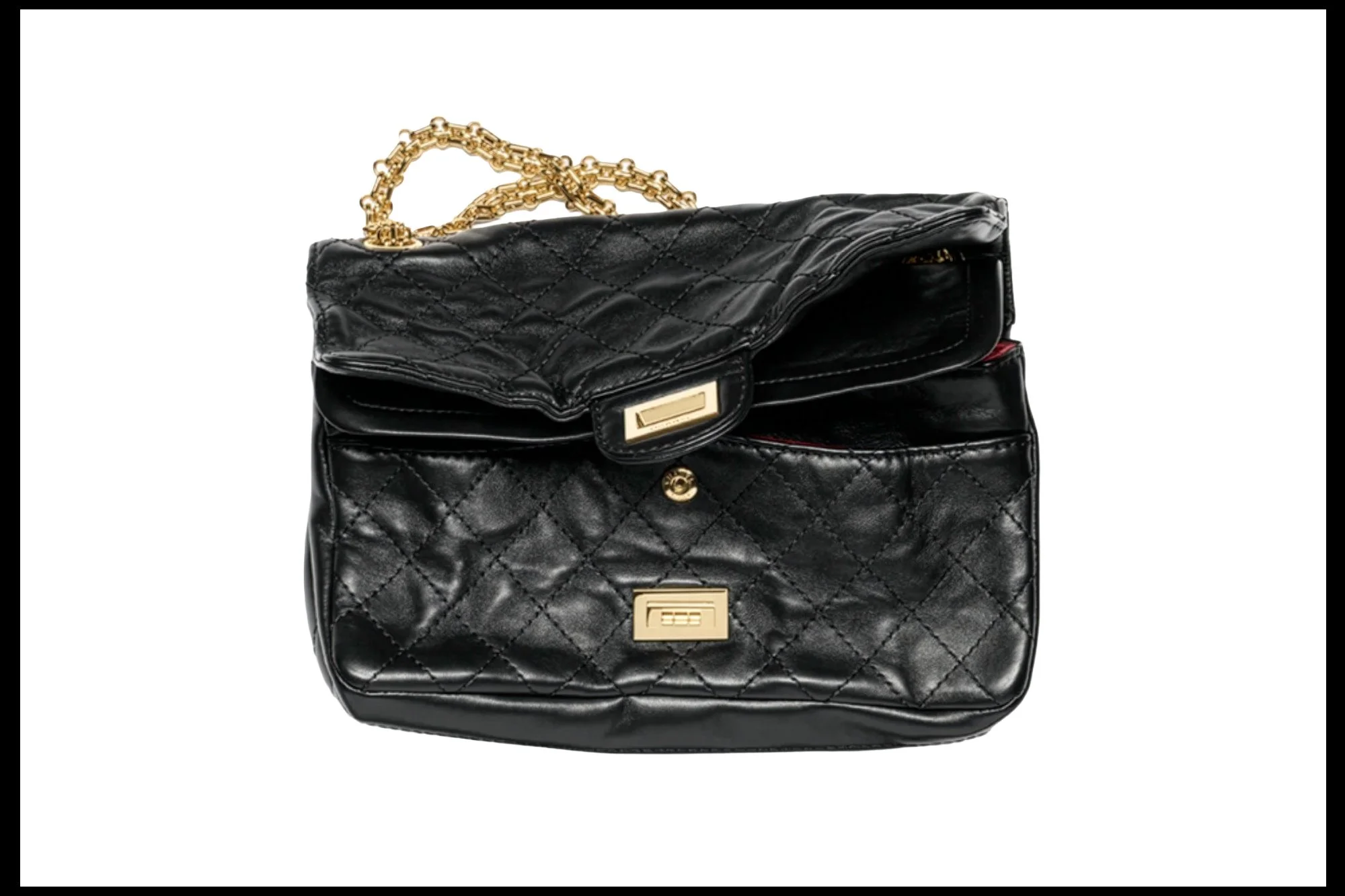
The Chanel 2.55 Reissue. A modern reissue of Gabrielle Chanel’s 1955 design, it remains the defining Chanel handbag: discreet, practical and far more radical than its later fame might suggest.
THE CHANEL BAG MOST PEOPLE GET WRONG
Text by Max
A STUDY IN DESIGN, AUTHORSHIP AND MODERN IDENTITY
Few objects in fashion operate simultaneously as design, symbol and system in the way the Chanel handbag does. It is widely recognised, endlessly reproduced, and persistently misunderstood.
What is commonly referred to as “the classic Chanel bag” is, in fact, a conflation of two distinct designs. The 2.55, introduced in February 1955 by Coco Chanel, and the later Classic Flap, reinterpreted under Karl Lagerfeld from 1983 onwards.
To separate them is not a matter of terminology. It is to recognise how fashion objects evolve, accumulate meaning, and become part of the cultural infrastructure of modern life.
1955: UTILITY AS A RADICAL GESTURE
When Chanel introduced the 2.55, she did not present it as spectacle, but as a solution.
Women were expected to carry their handbags in their hands. Chanel’s intervention was deceptively simple. A shoulder strap, in the form of a metal chain.
THE BAG MOVED FROM ACCESSORY TO AN EXTENSION OF THE BODY.
That shift altered more than convenience. It enabled movement, changed posture, and aligned with Chanel’s broader dismantling of restrictive dress. As with her use of jersey and her rejection of corsetry, the 2.55 belongs to a design philosophy grounded in ease.
Its details are equally deliberate. The quilted leather is often linked to equestrian textiles. The burgundy lining is frequently associated with the convent at Aubazine where Chanel spent part of her youth, although such biographical readings are difficult to verify and form part of the mythology that surrounds her work. The rectangular Mademoiselle lock avoids overt branding altogether.
The result is a design that communicates through proportion, material and construction rather than symbol. As the Victoria and Albert Museum has observed, Chanel’s enduring influence lies precisely in this balance between function and modern elegance.
DESIGN AND THE QUESTION OF EMANCIPATION
To claim that Chanel liberated women would be reductive. Social change is never the work of a single designer.
Yet design shapes the conditions under which bodies move and act. Chanel’s work consistently addressed physical constraint and, in doing so, contributed to a broader cultural shift towards autonomy.
The 2.55 can therefore be understood as a subtle tool of everyday autonomy.
Fashion does not only dress the body. It also produces meaning. The 2.55 exemplifies this dual role. A practical object that quietly encodes a shift in how women occupy space.
1983: VISIBILITY AND THE LOGIC OF BRANDING
By the time Lagerfeld took over Chanel in 1983, the house required not preservation, but recalibration.
His intervention was precise. The architecture of the 2.55 remained, but its semiotics shifted. The introduction of the interlocking CC clasp transformed the bag from a discreet object into a recognisable sign.
Luxury, by the late twentieth century, was no longer defined solely by craftsmanship. It was increasingly defined by visibility.
The Classic Flap reflects this transition. The leather threaded chain softens the object, while the clasp anchors it within a global system of image circulation.
It is not simply worn. It is read, by others, across contexts, as a signal of taste, access and identity.
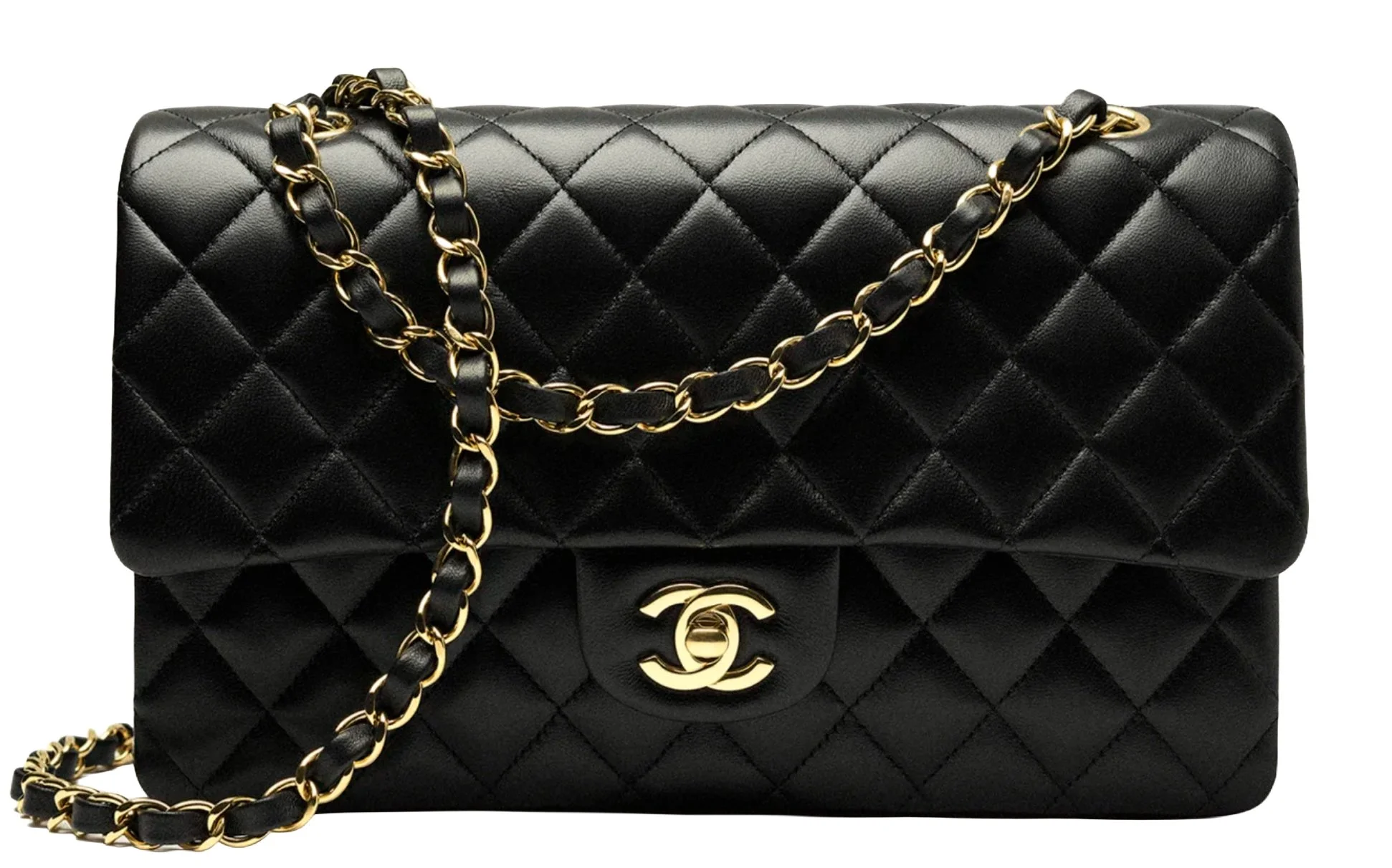
Chanel Classic Flap (11.12)
TWO OBJECTS, TWO SYSTEMS OF MEANING
The distinction between the two bags is not merely technical, but conceptual. It can, in simple terms, be understood as two distinct systems of meaning:
The 2.55 operates within a modernist logic
function, discretion, authorship
The Classic Flap operates within a postmodern one
identity, visibility, circulation
That both coexist within the same house is not contradictory. It is the mechanism through which luxury brands maintain continuity while producing relevance.

The Chanel Classic Flap by the Seine in Paris. Reinterpreted under Karl Lagerfeld from 1983 onwards, it transformed Chanel’s original handbag language into a recognisable symbol of modern luxury. Photo AI
PERSISTENCE, VALUE, AND CRITIQUE
The Chanel bag endures because its design is structurally sound. Its proportions and materials allow it to move across decades without appearing obsolete.
Yet its meaning today extends beyond design. The Classic Flap, in particular, has become an asset in its own right, shaped by controlled scarcity and repeated price increases.
Since the mid 2010s, Chanel has steadily raised prices across its core handbag lines. A medium Classic Flap that once retailed for under €4,000 in Europe now approaches or exceeds €9,000. This narrows the gap to entry level Hermès models and signals a deliberate repositioning.
This is not incidental. It reflects a strategy built on scarcity, price signalling and brand elevation.
In this context, the bag functions not only as an accessory, but as a marker within a hierarchy of consumption. It embodies both autonomy and exclusion, aspiration and control.
As CHANEL emphasises in its archival narratives, continuity is central to its identity. Yet continuity, in fashion, is always constructed. The bag persists because it is continuously reinterpreted.
CONCLUSION: BEYOND RECOGNITION
To distinguish between the 2.55 and the Classic Flap is to move beyond surface recognition.
It is to understand how objects become carriers of history, ideology and identity.
The Chanel bag endures not because it remains unchanged, but because it adapts to the systems that give it meaning.
The question is not which version is more authentic.
It is which version most clearly reflects the world it inhabits.
REFERENCES (SELECTED)
Victoria and Albert Museum
CHANEL archives
Alexandra Palmer, Chanel (V&A Publications)